

Brent Crude Oil prices move dynamically based on a continuous stream of international data, geopolitical headlines, and fundamental market shifts. Because Brent serves as the primary pricing benchmark for two-thirds of the world’s physical oil trade, fluctuations in its value ripple across global financial markets, impacting fuel costs, inflation, and corporate earnings worldwide.
To navigate energy markets effectively, traders and investors must look past daily price charts and understand the underlying mechanics that drive price action. Before diving into price catalysts, readers new to energy benchmarks may want to start by reviewing What Is Brent Crude Oil
to learn the origins and physical characteristics of this global asset.
At its core, Brent oil pricing reflects the interaction between physical crude supply, global consumption demand, production quotas, and market sentiment. This comprehensive guide breaks down the core factors that affect Brent Crude Oil prices, explaining how supply, demand, OPEC+ policies, macroeconomic growth, and geopolitical developments shape energy market trends.
How Are Brent Crude Oil Prices Determined?
Brent Crude Oil prices are established through the interaction of physical oil buyers and sellers, financial futures markets, and speculative trading platforms. Rather than being set by a single exchange or government agency, Brent oil pricing reflects real-time global consensus regarding current supply, immediate demand, and future availability.
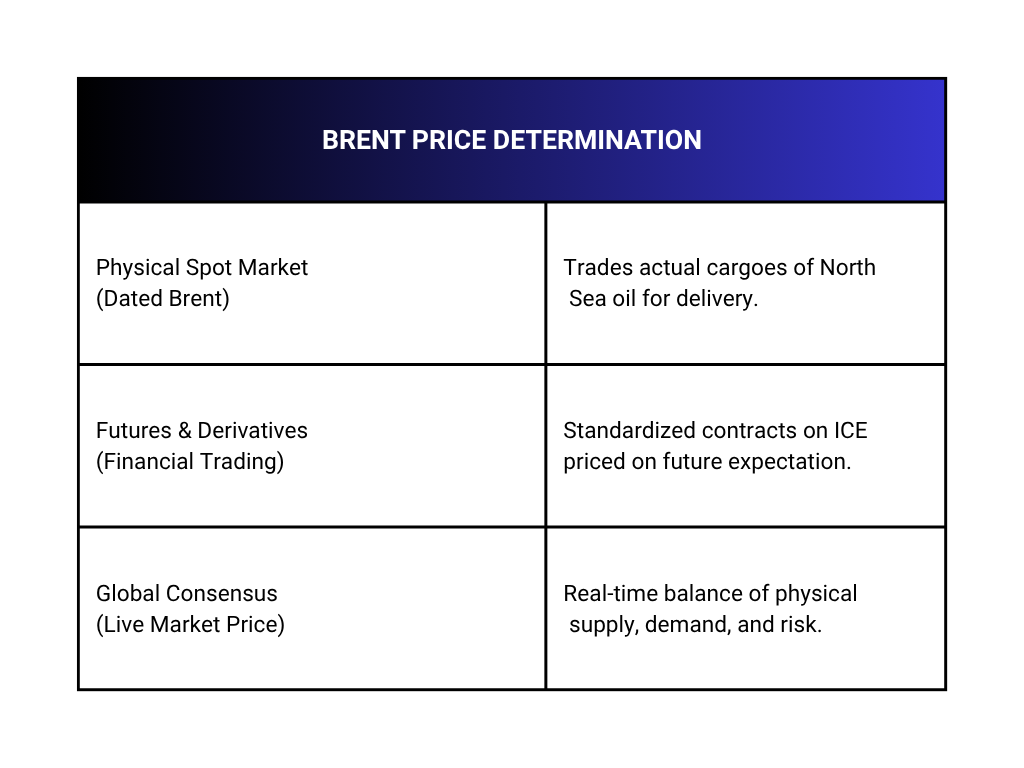
- The Physical Market: In the physical spot market (often tracked via Dated Brent), refineries, state oil companies, and trading firms buy and sell physical cargoes of crude oil. Prices vary depending on transport logistics, refining capacity, and immediate local demand.
- The Futures Market: Most price discovery occurs on derivative exchanges, primarily the Intercontinental Exchange (ICE). Buyers and sellers trade standardized futures contracts representing 1,000 barrels of oil for delivery on future dates.
- Price Expectations: Financial markets pricing Brent Crude Oil do not merely reflect today’s physical supply and demand they price in future expectations. If traders anticipate a supply shortfall three months from now due to political tension or production cuts, futures prices will rise today.
Because Brent is waterborne and easily shipped worldwide, it serves as an efficient global pricing reference, establishing the baseline price against which hundreds of regional crude varieties are calculated.
Oil Supply and Demand: The Core Drivers of Brent Prices
The fundamental law of supply and demand represents the single most critical force behind Brent Crude Oil prices. When the balance between global oil production and global oil consumption shifts, prices adjust to re-establish market equilibrium.
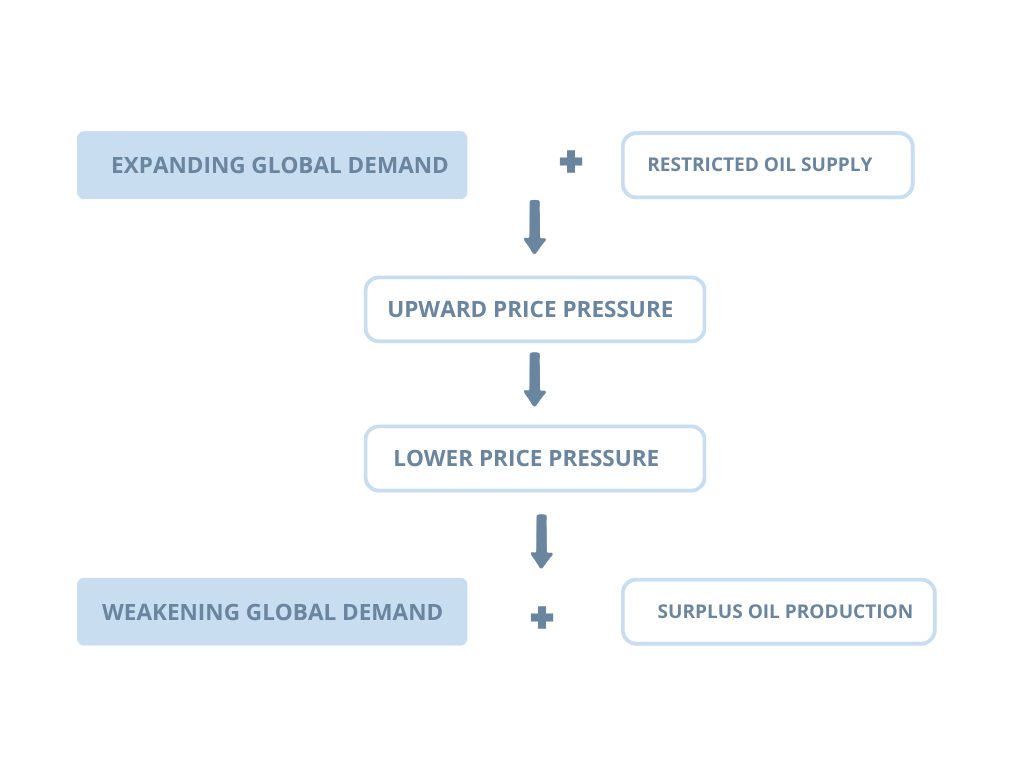
- Rising Demand vs. Limited Supply: When economic growth pushes fuel consumption higher while production remains flat or constrained, buyers compete for available barrels, putting upward pressure on prices.
- Weakening Demand vs. Excessive Supply: If global consumption slows while oil producers continue pumping at high rates, a market surplus develops, creating lower price pressure.
- Inventory Buffers: Commercial crude inventories act as a shock absorber between supply and demand. Unusually low inventory levels leave markets vulnerable to price spikes, while bloated inventory reserves suppress price gains.
How Changes in Global Oil Demand Affect Brent
Global oil supply and demand dynamics are heavily dictated by consumption trends across key sectors:
- Economic Growth: Industrial expansion, manufacturing activity, and rising consumer spending increase energy consumption, boosting crude demand.
- Transportation Trends: Fleet freight logistics, consumer driving habits, and international aviation activity consume massive volumes of refined products like diesel and jet fuel.
- Seasonal Shifts: Demand follows seasonal patterns. For example, the North American “summer driving season” boosts gasoline demand, while colder winter months in the Northern Hemisphere increase consumption of heating oil.
How Changes in Oil Supply Affect Brent
On the other side of the equation, global crude supply levels depend on physical production constraints and distribution networks:
- Field Production Levels: Output levels from major non OPEC oil-producing nations such as the United States, Canada, Brazil, and Norway directly influence global market availability.
- Infrastructure Bottlenecks: Pipeline constraints, shipping terminal delays, or refinery maintenance outages can temporarily restrict export availability, disrupting local supply balances.
- Unexpected Outages: Natural disasters, extreme weather events (such as hurricanes in the Gulf of Mexico or freezing conditions disrupting production facilities), and mechanical failures cause sudden supply drops that shock market prices.
How OPEC+ Production Decisions Affect Brent Crude Oil Prices
The Organization of the Petroleum Exporting Countries along with its allied producers (collectively known as OPEC+) plays a central role in managing global crude oil supply. Controlling a significant percentage of world oil production capacity, OPEC+ uses output adjustments to stabilize energy markets.
[ OPEC+ QUOTA REDUCTIONS ] ──> Reduces Global Export Volume ──> Tightens Market ──> Pushes Prices Higher
[ OPEC+ QUOTA INCREASES ] ──> Adds Supply to the Market ──> Eases Shortages ──> Dampens Price Pressure
- Production Cuts: When OPEC+ agrees to reduce OPEC+ production quotas, the coalition restricts the volume of crude available to international buyers, tightening global supply and supporting higher prices.
- Production Increases: When the group lifts production caps or restores previously withheld output, increased market supply can dampen price pressure unless matched by strong demand growth.
- Market Sentiment vs. Physical Supply: Traders monitor official OPEC+ ministerial meetings and commentary closely. Simply announcing a planned quota change can alter market expectations and move Brent prices instantly, well before the physical output adjustments take effect.
- Compliance Levels: The market evaluates whether member states actually adhere to their assigned production targets. Discrepancies between announced quotas and actual physical exports can create unexpected market volatility.
While OPEC+ output policies heavily influence energy markets, the group does not exercise absolute control over Brent Crude Oil prices. Non-OPEC production growth, private shale output, and global macroeconomic conditions frequently counteract OPEC+ policy objectives.
Geopolitical Events and Brent Crude Oil Prices
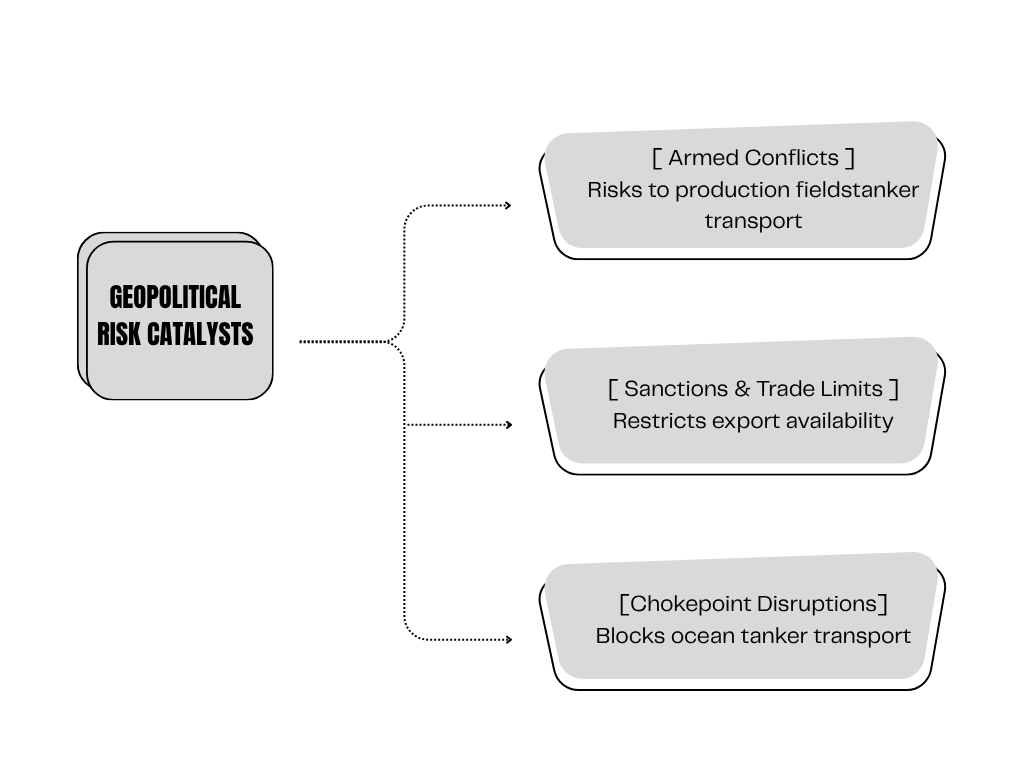
Because crude oil is produced and transported across sensitive geographic regions, geopolitical events represent a primary source of volatility for Brent crude prices.
- Supply Disruption Risks: Political instability, armed conflicts, or civil unrest in key oil-producing regions threaten production fields, export terminals, and shipping infrastructure.
- Sanctions and Export Restrictions: Economic sanctions imposed on major oil-exporting nations restrict the volume of crude that can legally enter global markets, forcing refiners to seek alternative supply sources.
- Maritime Transit Chokepoints: A significant portion of international oil shipments passes through narrow maritime transit routes, such as the Strait of Hormuz, the Bab el-Mandeb Strait, and the Suez Canal. Blockades, military activity, or maritime security threats in these chokepoints restrict ocean tanker traffic, adding risk premiums to energy prices.
- Energy Security Concerns: Unexpected geopolitical shifts force governments and commercial buyers to build strategic reserves, increasing short-term buying pressure.
Understanding how political headlines impact commodity trading is essential for navigating sudden market shifts. For a deeper analysis of cross-asset impacts, read our guide on how geopolitical events impact forex and commodities
How Global Economic Growth Influences Brent Crude Oil Prices
Energy consumption moves in tandem with macroeconomic health. When global economic activity expands, industrial output, freight logistics, and consumer travel surge, increasing crude oil demand.
- Manufacturing and Industrial Production: High manufacturing output requires substantial energy inputs for factory operations, power generation, and chemical processing.
- Global Trade Volumes: Rising international trade increases cargo shipping, trucking, and rail transportation, elevating diesel and fuel oil consumption.
- Recessionary Pressures: Economic downturns, high inflation, or tight financial conditions dampen consumer spending and business activity, reducing oil consumption and putting downward pressure on prices.
To anticipate macroeconomic trends that shift energy demand, active market participants monitor scheduled data releases using tools explained in our guide on economic calendars and commodity prices
How Inflation and Interest Rates Can Influence Oil Markets
Macroeconomic policies managed by central banks indirectly shape energy market trends through consumer demand and borrowing costs.
- Inflation Pressures: Higher energy costs feed directly into production and shipping expenses, driving up broader consumer inflation. Conversely, severe inflation erodes consumer purchasing power, eventually suppressing energy demand.
- Interest Rate Policies: To combat persistent inflation, central banks raise interest rates. Higher borrowing costs slow business expansion, reduce capital investment, and cool overall economic activity, which can lead to lower oil demand expectations.
- Currency Valuations: Interest rate adjustments influence national currency values. Since Brent crude oil is priced in US Dollars (USD), changes in US interest rate expectations alter dollar strength, indirectly impacting crude affordability for international buyers holding other currencies.
Why Oil Market Volatility Can Increase
Energy markets are susceptible to sudden price swings. Oil market volatility rises when unexpected events disrupt physical supply chains or force traders to rapidly adjust their future risk expectations.
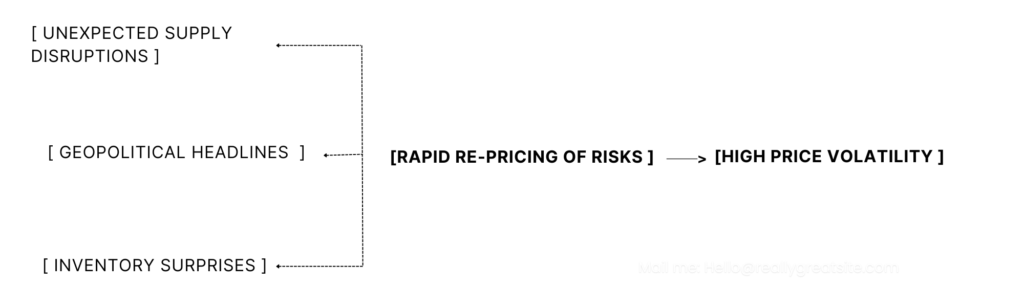
- Supply Disruption Shocks: Unplanned outages at major production platforms or pipeline failures require immediate market re-pricing.
- Geopolitical Headlines: Breaking political events or conflicts create sudden uncertainty around future supply safety, triggering rapid price adjustments.
- Inventory Data Surprises: Weekly inventory reports that deviate sharply from consensus forecasts force market participants to adjust their short-term supply and demand assumptions instantly.
- Shifting Trader Sentiment: Large institutional market participants adjusting derivative hedges or speculative positions can amplify short-term price momentum during fast-moving markets.
This elevated volatility means Brent crude prices rarely move in a smooth, linear fashion, often experiencing sharp short-term price swings in response to news developments.
How Global Energy Markets Affect Brent Crude Oil
Brent Crude Oil trades within an interconnected web of global energy markets, where developments in adjacent markets impact crude pricing.
- Inter-Benchmark Spreads: Traders constantly track the price differential between Brent and other major benchmarks, particularly West Texas Intermediate (WTI). Widening or narrowing spreads alter shipping economics and trade flows between regions.
- Natural Gas Substitution: High natural gas prices can encourage industrial energy users and power generators to switch to oil-based fuels where feasible, increasing crude oil demand.
- Refined Product Margins: The profitability of refining crude oil into end products known as the “crack spread” influences refinery operating rates. High demand for gasoline and diesel encourages refiners to purchase more crude, supporting Brent prices.
- Cross-Asset Diversification: Institutional investors evaluate crude oil alongside other major assets. When assessing overall commodity exposure, investors often explore oil and other major commodities like Gold and Natural Gas to balance portfolio risk against inflation.
How Crude Oil Inventories Can Affect Brent Prices
Government agencies and industry groups regularly publish crude oil inventory data, providing transparency regarding stored supply reserves.
- Commercial Storage Trends: Declining crude inventories indicate that demand is outstripping current supply, signaling market tightness and supporting higher prices. Conversely, rising inventory levels indicate a market surplus.
- Strategic Petroleum Reserves (SPR): Governments maintain strategic oil reserves to cushion their domestic economies against severe supply shocks. Decisions by major nations to release crude from their SPR add physical barrels to the market, temporarily increasing supply and dampening price pressures.
- Market Signals: Weekly inventory updates such as those published by the US Energy Information Administration (EIA) serve as key calendar events for market participants, frequently triggering short-term price adjustments.
Why Market Expectations Matter for Brent Crude Oil Prices
In financial markets, anticipated future conditions often exert a stronger immediate impact on pricing than current physical realities.
- Forward-Looking Discovery: Futures markets price in what is expected to happen months in advance. If market participants anticipate that an upcoming economic stimulus program will boost fuel consumption next quarter, Brent futures prices may rise today.
- Factoring in Forecasts: Revisions to global oil demand forecasts by institutions like the International Energy Agency (IEA) alter trader expectations and long-term positioning.
- Expectation vs. Reality: When an anticipated event occurs such as a pre-announced OPEC+ quota change prices may move counterintuitively if the actual outcome was already fully priced into the market prior to the announcement.
Brent Crude Oil Prices and Other Financial Markets
Energy prices maintain strong correlations with broader financial markets, influencing equity sectors, currency valuations, and overall market sentiment.
- Equity Markets: Rising crude prices increase operational expenses for fuel-intensive industries like airlines, logistics providers, and manufacturers, while boosting revenues for exploration and production companies.
- Foreign Exchange (Forex): Energy-exporting currencies often move alongside crude oil trends due to national trade terms.
- Multi-Asset Sentiment: In broader financial management, traders track energy assets alongside alternative digital markets; for instance, some market participants evaluate energy commodities alongside crypto markets when evaluating global risk appetite across asset classes.
What Should Traders Watch When Following Brent Crude Oil Prices?
To track Brent crude price trends effectively, market participants monitor a structured checklist of fundamental indicators:
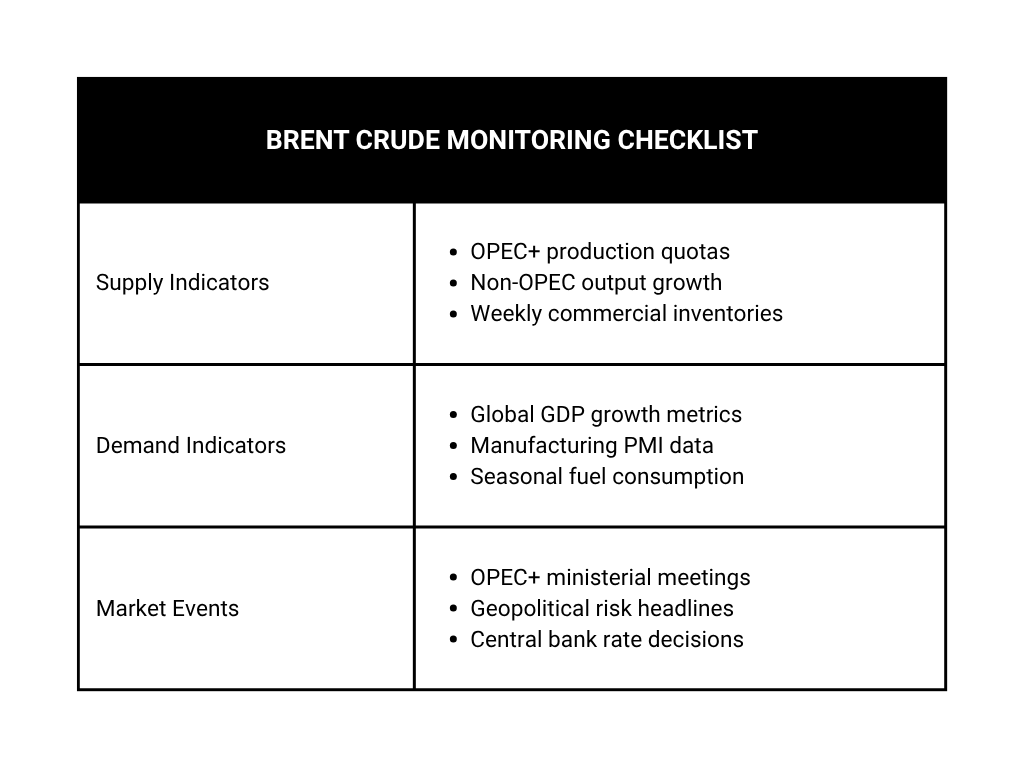
Supply Indicators
- Official OPEC+ production quota updates and compliance reports.
- Production output metrics from major non-OPEC producers (US, Canada, Brazil).
- Weekly commercial crude oil inventory reports.
Demand Indicators
- Global macroeconomic growth figures and industrial manufacturing indices (PMI).
- Seasonal transportation trends, travel statistics, and freight shipping volumes.
- Refinery capacity utilization rates and refined product inventory levels.
Market Events
- Scheduled OPEC+ policy meetings.
- Geopolitical developments in key energy-producing and transit regions.
- Major central bank interest rate announcements and inflation data releases.
How Brent Crude Oil Prices Can Affect Traders
Fluctuations in Brent crude oil prices present both trading opportunities and financial risks for market participants.
- Price Volatility: Rapid price shifts driven by unexpected breaking news can create fast-moving market conditions.
- Impact of Leverage: Financial derivatives like CFDs allow traders to gain market exposure using leverage. While leverage amplifies potential gains, it equally magnifies potential losses during adverse market moves.
- Spread and Execution Changes: During periods of extreme news-driven market volatility, bid-ask spreads may widen, and execution slippage may occur.
Before participating in leveraged commodity markets, market participants must thoroughly evaluate CFD trading risks
and implement disciplined risk management controls.
FAQ
Does OPEC+ affect Brent Crude Oil prices?
Yes. OPEC+ output decisions significantly impact global crude supply availability. When OPEC+ restricts output quotas, global supply tightens, supporting prices; when quotas are expanded, increased supply can exert downward pressure on prices.
How does oil supply and demand affect Brent prices?
When global demand for crude oil outstrips available production supply, competition among buyers pushes Brent prices higher. Conversely, when supply exceeds consumption demand, accumulating inventory surpluses force prices lower.
Can geopolitical events affect Brent Crude Oil prices?
Yes. Conflicts, economic sanctions, or transit blockades in major energy-producing regions threaten physical supply lines and transport routes, adding geopolitical risk premiums to Brent crude prices.
Why is Brent Crude Oil so important to global markets?
Brent Crude Oil serves as the primary benchmark for pricing roughly two-thirds of all globally traded crude oil cargoes, directly influencing fuel costs, manufacturing expenses, inflation, and international trade balances.
Why are Brent Crude Oil prices volatile?
Brent crude prices are volatile because physical energy supply chains take time to adjust, while market risk expectations, geopolitical headlines, and economic data updates can change instantly.
Final Thoughts
Understanding what affects Brent Crude Oil prices requires looking at a combination of physical fundamentals, macroeconomic forces, and market psychology. While fundamental supply and demand sets the broad long-term trend, OPEC+ policies, geopolitical headlines, economic growth data, and crude inventory reports dictate medium- and short-term price movements.
By continuously tracking supply indicators, demand trends, and geopolitical developments, market participants can build a structured framework for analyzing Brent crude oil price movements and navigating broader global energy markets effectively.