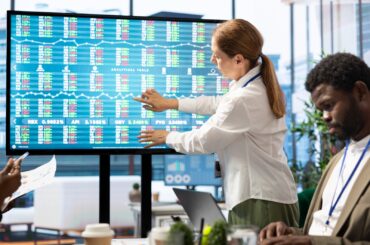

Global commodity markets operate within an intricate web of international economic conditions, geopolitical developments, weather patterns, industrial demand, and unexpected supply chain disruptions. Because these physical markets move physical goods across borders, a single event such as a canal blockage, an unseasonal frost, or a central bank rate adjustment can ripple across energy, metals, and agricultural sectors almost instantly.
For individual traders and market analysts, evaluating these overlapping variables simultaneously presents a monumental challenge. Traditional manual research often struggles to synthesize continuous streams of structured financial figures and unstructured global data.
To bridge this gap, artificial intelligence is reshaping AI in commodity trading and market analysis. By deploying machine learning algorithms and advanced data processing, market participants can evaluate vast amounts of commodity data, spot recurring patterns, and enhance their market analysis frameworks.
However, while AI drastically improves data processing capabilities, it is not a crystal ball. Artificial intelligence serves as an analytical partner that supports informed decision-making it does not offer guaranteed price predictions or eliminate market risk.
Understanding Traditional Commodity Market Analysis
Before examining how artificial intelligence modifies market research, it is essential to review the foundational principles of traditional commodity analysis.
Supply and Demand: The Foundation of Commodity Prices
At its core, commodity pricing follows the fundamental law of supply and demand.
- Production Levels: The volume of raw materials extracted, mined, or harvested directly sets baseline supply.
- Inventory Reserves: Official stockpiles such as crude oil inventories or central bank gold reserves act as buffers against market shocks.
- Industrial Consumption: Economic expansion boosts demand for industrial metals and energy, while economic slowdowns curtail consumption.
Geopolitical and Economic Influences
Commodities are deeply tied to macroeconomic and political stability:
- Geopolitical Events: Trade restrictions, diplomatic conflicts, and localized wars can instantly disrupt supply routes.
- Monetary Policy: Interest rate adjustments, inflationary trends, and fluctuations in major currencies (particularly the US Dollar) heavily dictate commodity pricing power.
- Economic Indicators: Global Manufacturing PMI data and industrial production outputs signal shifting demand trends.
Weather Conditions and Seasonal Patterns
Environmental factors directly govern soft commodities and energy sectors:
- Agricultural Yields: Severe droughts, unexpected frosts, or heavy rainfall determine crop production volumes.
- Energy Consumption: Unusually cold winters drive natural gas heating demand, while extreme summer heatwaves strain electrical grids and fuel usage.
Why Traditional Commodity Analysis Can Be Challenging
Traditional market analysis often runs into operational bottlenecks:
- Fragmented Data Sources: Crucial information remains scattered across global news outlets, government shipping ledgers, and private inventory reports.
- Rapid Market Shifts: Global developments unfold continuously, making real-time manual updates difficult.
- Complex Multi-Variable Correlations: Dissecting how macro factors like interest rates, currency swings, and geopolitical events interact simultaneously can be overwhelming.
Understanding what affects Brent crude oil prices illustrates how supply disruptions, OPEC decisions, and global demand interact in real-world energy markets.
What Is AI in Commodity Trading?
Integrating AI commodity analysis into financial research involves using advanced computer algorithms to ingest, organize, and interpret market information at scale.
Understanding Artificial Intelligence in Financial Markets
In commodity markets, artificial intelligence commodities systems process both structured data (such as historical price charts, trade volumes, and economic reports) and unstructured data (such as news headlines, shipping manifests, and weather maps). Rather than relying strictly on static rules, these systems parse massive datasets to extract actionable insights.
How Machine Learning Works in Commodity Markets
Machine learning commodities models form the engine behind modern financial AI. These models analyze historical price action alongside fundamental metrics to identify recurring structural patterns. As new market data feeds into the system, the models continuously refine their parameters, adapting to shifting volatility regimes and structural market transitions.
AI vs. Traditional Commodity Analysis

How AI Is Changing Commodity Market Analysis
The application of AI in commodity trading fundamentally alters how market participants parse data, track trends, and evaluate potential supply and demand shifts.

Processing Large Volumes of Commodity Data
AI excels at synthesizing massive, disparate datasets. By combining historical pricing archives, global order-book flows, and macroeconomic indicators with sector-specific supply data, AI platforms construct a unified view of the market landscape that manual workflows cannot replicate.
Identifying Market Trends and Price Patterns
Through sophisticated pattern recognition, machine learning algorithms evaluate price momentum and structural support/resistance zones across multiple timeframes. By detecting subtle shifts in trading volume and order flow, AI systems help analysts spot emerging trend reversals or unusual institutional positioning before they become obvious on standard charts.
Improving Commodity Market Forecasting
AI-driven predictive analytics model complex market scenarios by weighing historical correlations against current environmental inputs. While these models generate probabilistic price paths, market participants must treat these output scenarios as dynamic risk evaluations rather than absolute guarantees.
Analysing Supply and Demand Changes
Automated models track physical supply chain metrics in real time. By continuously monitoring refinery throughputs, port congestion data, and warehouse inventory changes, AI platforms identify potential supply bottlenecks or demand pullbacks well before official monthly government reports are published.
Using Alternative Data for Market Insights
One of the most significant shifts in AI commodity trading is the integration of alternative data sources:
- Satellite Imagery: Tracking oil tank floating-roof shadows to estimate inventory levels, or observing crop health via infrared vegetation indexing.
- Grounded Weather Sensors: Monitoring hyper-local climate changes to predict heating oil demand or freeze risks for cocoa and coffee yields.
- Maritime AIS Tracking: Monitoring real-time positions and speeds of global tanker fleets and dry-bulk carriers.
Analysing Market Sentiment Through AI
Natural Language Processing (NLP) enables algorithms to evaluate human commentary at scale. By parsing thousands of financial news articles, central bank transcripts, and trader feeds per second, AI gauges shifting market sentiment from bullish to bearish.
Integrating AI-driven market sentiment analysis allows traders to compare qualitative shifts in market psychology directly against technical price action.
How AI Is Used to Analyse Different Commodity Markets
Because physical commodities differ wildly in their fundamentals, AI models are customized specifically for each market segment.
AI Oil Analysis: Understanding Energy Market Movements
Energy markets move rapidly on geopolitical headlines, inventory updates, and global transport statistics. AI oil analysis models ingest real-time satellite tracking of maritime tankers, refinery maintenance schedules, and global pipeline throughputs.
When analyzing global crude oil benchmarks, understanding what is Brent crude oil
provides vital context for how international price points are established. Traders looking to put these insights into practice can also explore energy markets
to see how physical and derivative trading environments operate.
AI Gold Analysis: Understanding Precious Metal Price Movements
Precious metals function both as industrial inputs and primary financial hedges. AI gold analysis platforms evaluate global macroeconomic correlations such as US Dollar strength, real interest rate yields, and central bank purchase records. By analyzing systemic market risk metrics alongside bond market volatility, algorithms help traders evaluate safe-haven inflows during periods of geopolitical or monetary uncertainty.
To monitor these dynamics across physical and digital trading venues, market participants frequently explore precious metals markets for real-time pricing and liquidity depth.
AI Analysis Across Other Commodity Markets
- Agricultural Commodities: ML models merge satellite crop canopy readings with long-range weather projections to forecast harvest yields for corn, wheat, and soybeans.
- Industrial Metals: AI monitors manufacturing purchasing manager indices (PMI), global copper warehouse stockpiles, and EV battery production metrics to project industrial demand.
- Natural Gas: Systems analyze regional weather forecasts alongside LNG export terminal flows to track heating and cooling demand surges.
AI Trading Tools: Technologies Behind Commodity Analysis
Several underlying software architecture models power modern financial artificial intelligence.

Machine Learning Algorithms
- Supervised Learning: Trains on decades of historical commodity price data to evaluate potential relationships between known inputs and outcomes.
- Unsupervised Learning: Scans raw market data to discover hidden clusters or structural anomalies without pre-labeled targets.
Natural Language Processing (NLP)
NLP converts unstructured human language into structured quantitative scores. It processes central bank policy statements, diplomatic press releases, and commodity news updates to assign objective sentiment metrics to market events.
Predictive Analytics
Predictive frameworks evaluate current market variables against past data distributions to project dynamic, multi-scenario probability curves for future price movements.
Automated Data Monitoring
Automated tracking tools continuously scan global data pipelines. If an unexpected inventory drop or shipping disruption occurs, the system immediately flags the anomaly for human review.
Understanding the broader scope of AI trading tools and their applications helps clarify how software solutions integrate with modern brokerage platforms and trading desks.
Benefits of AI in Commodity Trading
Adopting AI in commodity trading workflows offers distinct analytical advantages:
- Faster Data Processing: AI ingests and synthesizes global data in milliseconds, vastly outperforming manual research speeds.
- Enhanced Pattern Recognition: Algorithms identify complex, non-linear correlations across disparate assets that human analysts might easily overlook.
- Broadened Market Perspective: Combining fundamental, technical, sentiment, and alternative datasets creates a more complete view of overall market dynamics.
- Continuous Market Scanning: AI systems operate continuously, tracking news and market developments across time zones without fatigue.
- Operational Efficiency: Automating routine data aggregation allows analysts to spend more time on high-level strategy and risk management.
Limitations and Risks of Using AI in Commodity Market Analysis
While AI provides powerful analytical capabilities, relying blindly on algorithmic outputs carries significant risk.
Historical Data Does Not Guarantee Future Accuracy
Machine learning models build probabilities based on past market behavior. However, structural shifts such as sudden regulatory overhauls or unprecedented economic crises can render historical patterns obsolete.
Data Quality and Reliability Issues
An AI model is only as reliable as the data it ingests (“garbage in, garbage out”). Erroneous government reports, delayed shipping data, or conflicting news sources can distort algorithmic outputs.
Unexpected Geopolitical Developments
Black swan events such as sudden military actions or abrupt trade embargoes often lack historical precedent in training datasets. AI models frequently struggle to evaluate these qualitative events accurately without human context.
Model Bias and Overfitting
If a machine learning model is overfitted to a specific historical dataset, it may interpret random market noise as a meaningful pattern. This leads to poor performance when deployed in live, dynamic market environments.
Why Human Judgment Still Matters
AI should serve as an analytical assistant rather than an autonomous decision-maker. Human experience remains essential for interpreting geopolitical context, evaluating tail risk, and executing sound risk management strategies.
How Traders Can Use AI Alongside Traditional Commodity Analysis
To maximize the benefits of AI commodity analysis, traders should combine technological tools with disciplined manual research.

- Start With Fundamental Foundations: Begin by evaluating baseline supply, demand, inventory reports, and central bank policy trends.
- Use AI to Streamline Data Processing: Leverage AI platforms to filter noise, track alternative datasets, and monitor global headlines in real time.
- Combine Technical and Fundamental Drivers: Cross-reference AI-generated price pattern alerts against physical market metrics and macro trends.
- Independently Verify Insights: Validate key algorithmic alerts against official economic releases and primary news sources.
- Apply Strict Risk Management: Always set stop-loss parameters, manage position sizing carefully, and prepare for unexpected market volatility regardless of how confident an AI model appears.
The Future of AI in Commodity Market Analysis
The integration of artificial intelligence in financial markets continues to evolve rapidly.
- Advanced Predictive Capabilities: Next-generation neural networks will process real-world physical and financial datasets with increasingly high precision.
- Expanded Alternative Data Integration: As IoT sensors, real-time satellite constellations, and climate monitoring networks proliferate, AI models will gain unprecedented visibility into physical supply chains.
- Automated Global Risk Monitoring: AI systems will offer increasingly sophisticated real-time alerts for localized supply chain disruptions and political developments.
- Hybrid Human-AI Collaboration: The future of market research lies in hybrid frameworks where institutional analysts leverage AI processing power while retaining final strategic control.
Conclusion: AI Is Transforming How Traders Understand Commodity Markets
Artificial intelligence is fundamentally changing how market participants approach commodity data processing, trend identification, sentiment evaluation, and scenario forecasting. By converting vast arrays of structured and unstructured information into actionable insights, AI helps traders build a clearer, more comprehensive view of complex global markets.
However, technology cannot eliminate the inherent risks of commodity trading. Physical markets remain subject to unpredictable weather changes, geopolitical tensions, and macroeconomic shifts. Successful analysis requires pairing advanced AI tools with traditional market fundamentals and disciplined risk management.
As financial markets continue to embrace digital innovation, traders can explore broader opportunities across global markets by partnering with established platforms like PFH Markets.
FAQ
Can AI accurately predict commodity prices?
No. While machine learning models evaluate historical correlations and generate dynamic price probability scenarios, they cannot guarantee accurate price predictions. Physical commodity markets remain subject to unexpected geopolitical conflicts, rapid climate events, and sudden economic policy changes.
What is the difference between AI oil analysis and traditional research?
Traditional oil research relies on manual analysis of weekly inventory updates and economic reports. In contrast, AI oil analysis continuously monitors real-time maritime satellite tracking, refinery maintenance schedules, pipeline throughputs, and global shipping manifests to identify supply bottlenecks immediately.
How does AI gold analysis evaluate precious metal movements?
AI gold analysis platforms evaluate real-time macroeconomic correlations such as US Dollar fluctuations, real interest rate yields, central bank purchase ledgers, and bond market volatility metrics. As a result, algorithms help analysts measure safe-haven demand during periods of financial uncertainty.
What types of alternative data do AI models use for commodities?
AI models ingest non-traditional data sources, including satellite imagery of oil storage tanks, infrared crop health tracking, maritime AIS shipping positions, grounded weather sensor feeds, and automated sentiment scoring of global news headlines.
What are the main limitations of using AI in commodity markets?
Key limitations include reliance on past data that may not reflect future structural shifts, poor output quality from unverified data feeds, and model overfitting. Furthermore, algorithms often struggle to evaluate black swan geopolitical developments that lack historical precedent.
Does AI replace human traders and market analysts?
No. AI acts as an analytical assistant that automates data aggregation and pattern detection. However, human judgment remains essential for interpreting geopolitical context, evaluating tail risk, and enforcing disciplined risk management strategies.
How can beginner traders start using AI for commodity analysis?
Traders can begin by using AI-driven analytics tools to organize market news and monitor technical price patterns. However, traders should always cross-check algorithmic insights against fundamental supply-demand data and official economic reports while maintaining strict risk controls.