Introduction
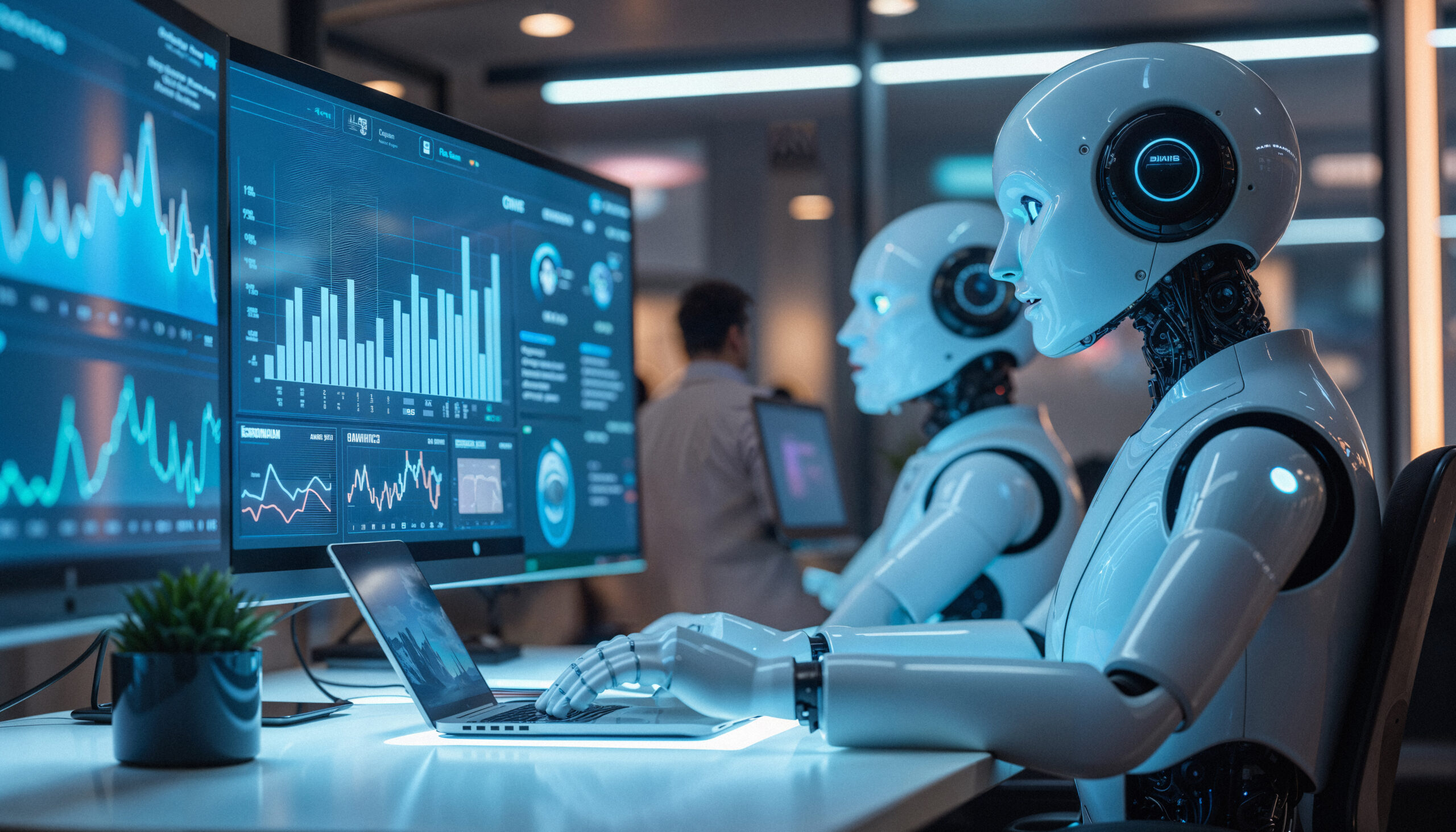
Artificial intelligence is playing an increasingly significant role in financial markets, and one of the most practical developments to emerge from this shift is the AI trading assistant. These tools are changing how traders research markets, monitor positions, and organize their daily workflow not by replacing human judgment, but by making it sharper and more efficient.
An AI trading assistant is a software system that uses artificial intelligence to support traders with market analysis, data monitoring, trade preparation, and decision support. Unlike basic automation tools that follow fixed rules, AI trading assistants adapt to new information, recognize patterns, and deliver context-aware insights that help traders make better-informed decisions.
The growing adoption of AI assistant for traders reflects a broader shift in how technology supports financial decision-making. Traders are no longer using AI to replace their thinking they are using it to spend less time on repetitive research and more time on strategy and execution.
In this guide, you will learn exactly what AI trading assistants are, how they work, what their core features are, where they genuinely add value, and where their limitations lie. For a broader overview of how AI is transforming trading technology overall, our AI Agents in Trading pillar guide provides essential context before diving deeper.
What Are AI Trading Assistants?
Simple Definition
An AI trading assistant is an intelligent software system designed to support traders by processing market data, identifying patterns, and delivering actionable insights all without requiring manual input for every task. The key distinction between a smart trading assistant and traditional trading software is adaptability. Traditional software executes fixed functions. An AI trading assistant learns from data, adjusts to changing conditions, and delivers increasingly relevant outputs over time.
Importantly, AI trading assistants are built around human and AI collaboration rather than full automation. The assistant handles data-intensive research and monitoring tasks, while the trader retains full control over final decisions. This partnership model is what makes AI trading assistants genuinely useful rather than simply replacing one form of manual work with another.
How AI Trading Assistants Work
The workflow of an AI trading assistant follows a clear, continuous cycle. First, market data collection gathers real-time and historical information from price feeds, economic calendars, news sources, and sentiment indicators simultaneously. Second, pattern recognition applies analytical models to identify trends, anomalies, and relationships within that data. Third, AI analysis processes those patterns within the broader market context to generate meaningful insights rather than isolated signals. Fourth, signal generation translates the analysis into specific trade ideas, alerts, or risk notifications that traders can act on. Fifth, decision support delivers the output in a clear, organized format that supports the trader’s own analysis rather than replacing it.
This continuous cycle operates around the clock, ensuring traders always have access to current, organized market intelligence before and during each trading session.
Core Features of AI Trading Assistants
Real-Time Market Monitoring
One of the most valuable features of an AI trading assistant is its ability to monitor multiple markets simultaneously in real time. Rather than watching individual charts manually, traders can rely on their AI assistant to track price movements across dozens of instruments, flag significant developments, and deliver organized updates — covering equities, forex, commodities, and indices without missing a single relevant move.
Technical Analysis Assistance
AI trading assistants can interpret technical indicators, identify trend direction across multiple timeframes, and detect key support and resistance levels automatically. Rather than spending time manually applying indicators to charts, traders receive structured technical summaries that highlight the most relevant conditions on their priority instruments.
Trade Idea Generation
Beyond analysis, AI trading assistants can generate trade ideas based on current market conditions. These include entry suggestions aligned with technical setups, exit planning based on key levels and risk parameters, and risk awareness alerts that flag when a potential trade carries higher-than-normal uncertainty. Crucially, these ideas serve as starting points for the trader’s own evaluation rather than instructions to follow blindly.
Market Sentiment Analysis
AI trading assistants can analyze news articles, economic event outcomes, and broader market commentary to deliver a consolidated sentiment overview. This helps traders understand whether the prevailing market mood is risk-on or risk-off, For a deeper understanding of how sentiment shifts affect market direction, our guide on market sentiment analysis explores the concept in detail.”
Portfolio Monitoring
For traders managing multiple open positions, AI trading assistants provide continuous portfolio monitoring. This includes tracking overall exposure across correlated instruments, delivering performance insights against predefined targets, and offering a diversification overview that highlights where risk may be concentrated.
Automated Alerts
AI trading assistants deliver intelligent, context-aware alerts that go beyond simple price notifications. Price alerts flag when instruments reach key levels. Volatility alerts notify traders when market conditions shift significantly. Risk notifications warn when overall exposure or individual position risk exceeds safe thresholds — all delivered in real time without requiring constant manual oversight.
Benefits of Using AI Trading Assistants
Faster Market Analysis
Tasks that previously required hours of manual research scanning multiple markets, reviewing economic releases, identifying technical setups take minutes with an AI trading assistant. Consequently, traders enter each session better prepared and with more time available for higher-level thinking.
Better Workflow Efficiency
AI trading assistants introduce a structured trading workflow automation that replaces ad hoc, inconsistent research habits. Pre-session briefings, post-session reviews, and ongoing monitoring all follow a consistent, organized process improving the quality of preparation without increasing the time investment.
Reduced Manual Research
By automating data gathering and initial analysis, AI trading assistants significantly reduce the cognitive burden of manual research. Traders no longer need to read through dozens of news articles, manually check economic calendars, or scan multiple charts before each session. Instead, they receive organized summaries and spend their energy on interpretation and decision-making.
Improved Market Monitoring
No human trader can monitor every relevant market development simultaneously. AI trading assistants fill this gap by maintaining continuous coverage across all priority instruments, ensuring traders never miss a significant price move, news event, or risk alert during active sessions or overnight periods.
Enhanced Decision Support
Rather than making decisions for traders, AI trading assistants improve the quality of the decisions traders make themselves. By providing organized, data-driven context alongside each trade idea or market alert, they help traders think more clearly and act more deliberately under live market conditions.
Consistent Data Analysis
Human analysts are susceptible to fatigue, bias, and inconsistency. AI trading assistants apply the same analytical process to every instrument, every session, without variation. This consistency produces more reliable outputs over time and removes the emotional variability that undermines manual research.
Better Time Management
Perhaps the most underappreciated benefit of AI productivity tools is the time they return to traders. By handling repetitive, time-intensive tasks automatically, AI trading assistants allow traders to focus on strategy development, performance review, and continuous learning the activities that drive long-term improvement rather than short-term busyness.
Limitations of AI Trading Assistants
Building an accurate picture of AI trading assistants requires an honest assessment of their limitations alongside their strengths.
AI Cannot Predict the Future
No AI trading assistant can reliably forecast market movements. Markets are influenced by an infinite number of variables, many of which are impossible to quantify or anticipate. AI systems identify patterns in historical and current data but past patterns do not guarantee future outcomes. Traders who expect AI to provide reliable predictions will consistently be disappointed.
Data Quality Matters
The accuracy of an AI trading assistant depends entirely on the quality of the data it processes. Incomplete, delayed, or inaccurate data feeds produce unreliable outputs. Therefore, traders must ensure their AI tools access clean, timely data from trustworthy sources.
False Signals Can Occur
AI trading assistants can generate incorrect or misleading signals, particularly during unusual market conditions that fall outside their analytical experience. Consequently, every AI-generated insight should serve as a starting point for independent verification rather than a definitive instruction.
Market Conditions Change
AI systems are trained on historical data, which means their performance can deteriorate when market dynamics shift significantly. A strategy or pattern that worked reliably in one market environment may produce poor results when conditions change and the AI may not immediately recognize the shift.
Human Judgment Is Still Essential
AI trading assistants support human judgment they do not replace it. Experience, intuition, contextual awareness, and emotional discipline are qualities that AI systems cannot replicate. The best trading outcomes come from combining AI efficiency with genuine human expertise.
Technology and Connectivity Risks
Like all technology, AI trading assistants are subject to software errors, server outages, and connectivity issues. Traders who rely heavily on these tools must maintain manual backup procedures and never assume the system is functioning correctly without regular verification.
AI Trading Assistant vs Traditional Trading Software
Understanding the difference between an AI trading assistant and traditional trading software helps traders choose the right tool for their needs.
| Feature | AI Trading Assistants | Traditional Trading Software |
|---|---|---|
| Pattern Recognition | Learns patterns dynamically | Rule-based only |
| Market Insights | Adaptive and context-aware | Static functions |
| Market Analysis | Comprehensive multi-source | Basic technical indicators |
| Workflow Assistance | Automated and organized | Requires manual input |
| Alerts | Intelligent and context-aware | Standard price notifications |
| Decision Support | Active guidance | Order execution only |
Traditional trading software executes instructions reliably but cannot adapt, learn, or provide contextual insights. AI trading assistants go significantly further by interpreting data dynamically and supporting the trader throughout the entire research and preparation process not just at the point of execution.
Who Can Benefit from AI Trading Assistants?
Beginner Traders
Beginners benefit from AI trading assistants as learning and research tools. By summarizing market conditions, explaining economic events, and structuring trade preparation, AI assistants accelerate the early learning curve without replacing the need to develop genuine trading knowledge.
Swing Traders
Swing traders who hold positions for several days or weeks benefit from AI assistants that monitor markets between sessions, flag developing setups, and deliver daily briefings without requiring constant screen time.
Day Traders
Day traders benefit from real-time market monitoring, fast technical analysis summaries, and intelligent alerts that keep them informed across multiple instruments throughout an active session.
Position Traders
Position traders who hold trades for weeks or months benefit from AI assistants that track fundamental developments, monitor portfolio exposure, and deliver periodic performance reviews without daily manual oversight.
Multi-Asset Traders
Traders managing positions across currencies, commodities, indices, and other asset classes benefit most from AI assistants’ ability to monitor diverse markets simultaneously and identify cross-asset relationships that manual monitoring would miss.
Professional Investors
Professional investors use AI trading assistants to improve research efficiency, maintain consistent analytical standards across large portfolios, and free up time for higher-level strategic thinking and client engagement.
Common Use Cases
AI trading assistants add genuine value across a wide range of practical applications that form part of any structured trading routine.
Daily market scanning replaces hours of manual chart review with organized, comprehensive summaries delivered before each session. Trade preparation structures the pre-trade analysis process, ensuring every entry decision is backed by clear reasoning. Economic calendar monitoring flags high-impact events and summarizes their likely market implications automatically. Technical confirmation cross-references AI-identified setups with the trader’s own chart analysis to improve entry quality. Risk management monitoring tracks position exposure and flags when overall risk exceeds predefined limits. Portfolio review delivers regular performance summaries against targets without requiring manual calculation. Trading journal insights analyze past decisions to identify behavioral patterns and recurring mistakes. Workflow automation handles repetitive administrative tasks, from compiling research notes to generating end-of-day reports.
Best Practices for Using AI Trading Assistants
Using an AI trading assistant effectively requires a disciplined approach that treats the technology as a support tool rather than an autonomous decision-maker.
Always verify AI insights against primary market sources before acting on them treat every AI output as a hypothesis, not a conclusion. Combine AI analysis with your own technical analysis to ensure entries are backed by both data-driven context and chart-based confirmation. Maintain a clearly defined trading plan so that AI insights have a structured framework to fit into. Apply proper risk management on every trade regardless of what the AI assistant suggests risk control is always the trader’s responsibility. Continue learning about the markets, trading strategies, and analytical techniques so that you can evaluate AI outputs intelligently rather than accepting them without scrutiny. Finally, avoid overreliance on automation by ensuring you could still research and prepare for a session effectively without AI support technology should enhance your capabilities, not replace them.
Common Misconceptions About AI Trading Assistants
Myth: AI Always Makes Profitable Trades
Reality: AI trading assistants provide analysis and decision support they do not execute trades or guarantee profitable outcomes. Profitability still depends on the quality of the trader’s strategy, risk management, and execution.
Myth: AI Replaces Traders
Reality: AI trading assistants are designed to enhance human capabilities, not replace them. The most effective outcomes come from combining AI efficiency with human experience, judgment, and discipline.
Myth: AI Never Makes Mistakes
Reality: AI systems make errors regularly, particularly in unusual market conditions or when working with incomplete data. Every AI-generated output requires human verification before influencing a trading decision.
Myth: Only Professionals Can Use AI
Reality: AI trading assistants are increasingly accessible to traders at all experience levels. Beginners can use them as research and learning tools, while experienced traders leverage them for efficiency and multi-market coverage.
The Future of AI Trading Assistants
The capabilities of AI trading assistants will continue to develop significantly over the coming years, driven by improvements in underlying AI technology and growing adoption across financial markets.
Better personalization will allow AI assistants to learn individual traders’ styles, preferences, and risk tolerances with greater precision, delivering increasingly tailored insights over time. Smarter market analysis will combine technical, fundamental, and sentiment data more seamlessly, producing a more complete picture of market conditions than current systems can achieve. Natural language interfaces will make AI assistants easier to interact with, allowing traders to ask questions and receive structured answers in plain language rather than navigating complex dashboards. Multi-market intelligence will enable AI assistants to identify relationships and opportunities across a broader range of asset classes simultaneously. Improved automation will integrate AI assistants more deeply into the full trading routine from pre-session preparation through live monitoring to post-session review. Human-AI collaboration will remain at the core of this evolution, with the most effective traders using AI to augment their capabilities rather than delegate their responsibilities.
Frequently Asked Questions
How do AI trading assistants work?
AI trading assistants work by continuously collecting market data, applying pattern recognition and analytical models to that data, and delivering organized insights, alerts, and trade ideas that support the trader's own decision-making process.
Can beginners use AI trading assistants?
Yes. Beginners can benefit significantly from AI trading assistants as research and learning tools. However, developing a solid understanding of trading fundamentals alongside AI use is essential for making the most of the technology.
Are AI trading assistants fully automated?
No. Most AI trading assistants focus on analysis, monitoring, and decision support rather than fully automated trade execution. Human oversight and final decision-making authority remain with the trader at all times.
Can AI predict market movements?
No. AI trading assistants identify patterns and provide analytical insights based on current and historical data, but they cannot reliably predict future market movements. Markets are influenced by too many variables for any system to forecast with consistent accuracy.
Are AI trading assistants suitable for all markets?
Generally yes. AI trading assistants can monitor and analyze a wide range of markets including forex, equities, commodities, and indices. However, their effectiveness depends on the quality of the data available for each market.
What are the biggest limitations of AI trading assistants?
The biggest limitations include the inability to predict future market movements, dependence on data quality, the risk of false signals, performance deterioration when market conditions change significantly, and the ongoing need for human judgment and oversight.
Should traders rely entirely on AI?
No. AI trading assistants are most effective when used alongside not instead of a trader's own knowledge, experience, and analytical skills. Overreliance on automation removes the critical thinking that long-term trading success requires.
Conclusion
AI trading assistants represent one of the most practical applications of artificial intelligence in financial markets today. They improve research efficiency, organize market monitoring, support better decision-making, and free traders to focus on strategy rather than repetitive data gathering.
However, they are not a shortcut to profitability, and they are not a replacement for trading knowledge, experience, or disciplined risk management. The best results come from combining AI insights with sound trading discipline using technology to work smarter rather than expecting it to work instead of you.
For traders ready to explore AI trading technology in greater depth, our AI Agents in Trading guide covers the complete landscape of how AI is reshaping modern trading workflows. Additionally, our AI Trading Tools Explained guide breaks down the full range of AI-powered technologies available to traders today. For more trading education resources, visit our Blog and explore our full library of guides designed to support traders at every level.
The future of trading will involve AI but the judgment, discipline, and responsibility will always belong to the trader.