Introduction
Most traders spend the majority of their time looking for winning trades. They study charts, analyze economic data, develop strategies, and refine entries. Yet the evidence consistently shows that finding good trades is rarely the reason traders fail poor risk management is. Losses that could have been small become account-threatening. Positions sized too large turn manageable drawdowns into emotional crises. The discipline to cut losses and protect capital is what separates traders who survive long enough to succeed from those who do not.
AI agents for risk management are emerging as a practical tool that helps traders monitor, assess, and protect their positions more effectively than manual methods alone. These intelligent systems process market data in real time, identify developing risks, and support better decision-making without requiring constant manual oversight.
But can AI trading risk management actually reduce trading risk or does it introduce new risks of its own? In this guide, you will get a balanced, honest answer to that question, along with a clear explanation of how these tools work, where they genuinely help, and where human judgment remains essential. For a broader overview of how AI is reshaping trading technology, our AI Agents in Trading pillar guide provides the essential foundation.
Why Risk Management Matters More Than Perfect Trade Entries
Most traders spend the majority of their time looking for winning trades. Yet the evidence consistently shows that finding good trades is rarely the reason traders fail poor risk management is. Losses that could have been small become account-threatening. The discipline to cut losses and protect capital is what separates traders who survive long enough to succeed from those who do not.
Common Trading Risks That Destroy Accounts
Several risk patterns consistently undermine trading accounts regardless of strategy quality. Overleveraging amplifies losses to levels that a single bad trade can make unrecoverable. Fear and greed drive emotional decisions that cause traders to abandon their rules at precisely the wrong moments. Sharp, fast price moves during high volatility periods are difficult to track quickly enough through manual monitoring alone. Central bank surprises and geopolitical developments can push prices beyond predefined risk levels before a response is possible. Without consistent position sizing rules, risk exposure varies unpredictably from trade to trade even when the underlying strategy has a genuine edge.
The Role of Trading Psychology
Understanding trading psychology is central to addressing these risks. Live trading creates intense emotional and psychological pressure. This pressure consistently undermines the rational decisions traders know they should be making. Risk analysis that removes emotion from the equation through structured rules and consistent monitoring is the most reliable solution. Our AI Agents for Market Analysis guide explores how AI-powered analysis supports this structured approach across the broader trading process.
What Are AI Agents for Risk Management?
An AI agent for risk management is an intelligent software system designed to monitor market conditions, track open positions, and identify potential risks in real time delivering alerts and insights that support better protective decisions. Unlike traditional trading bots that execute predefined rules mechanically without adaptation, AI agents process information dynamically, learn from market behavior over time, and provide context-aware decision support rather than simply triggering fixed actions.
The key distinction is continuous learning. Traditional risk tools apply the same fixed parameters regardless of how market conditions change. AI risk monitoring systems recognize when conditions are shifting when volatility is rising, when correlations between assets are changing, or when liquidity is thinning and adjust their assessments accordingly. This adaptive capability makes AI agents significantly more useful during the unpredictable market environments where risk management matters most.
Importantly, AI agents for risk management are designed to support human decision-making rather than automate it entirely. The trader defines the rules, reviews the alerts, and makes the final call. The AI handles the data processing, pattern recognition, and continuous monitoring that would be impossible to sustain manually across multiple markets and positions.
How AI Agents Help Reduce Trading Risk
Continuous Market Risk Monitoring
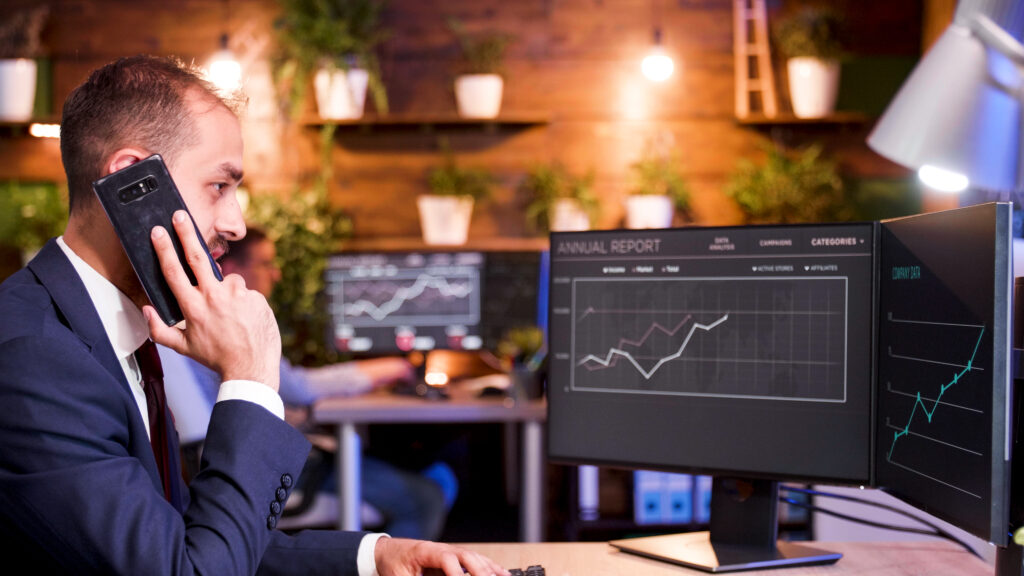
The most fundamental capability of AI risk monitoring is continuous, uninterrupted coverage of market conditions across all monitored instruments. AI agents detect volatility spikes as they develop, giving traders early warning before conditions become dangerous. They monitor liquidity across markets, flagging when trading conditions thin significantly and execution risk increases. Economic event monitoring ensures traders are aware of high-impact releases before they occur, rather than being caught off guard by sudden volatility. Unusual price movements those that deviate significantly from recent patterns — trigger immediate alerts that allow traders to assess whether their open positions require protective action.
This continuous coverage removes a critical weakness of manual risk management. No human can watch everything simultaneously, at all hours, without fatigue.
Dynamic Position Size Recommendations
One of the most practical applications of smart risk control through AI is dynamic position sizing support. Rather than applying a fixed lot size or risk percentage mechanically regardless of current conditions, AI agents can recommend adjustments based on real-time volatility, current portfolio exposure, and available capital. When volatility is elevated, AI agents suggest smaller positions to maintain consistent risk in dollar terms. When multiple correlated positions are already open, the AI flags that additional exposure in related instruments increases overall portfolio risk beyond safe levels. This dynamic approach to capital allocation improves risk consistency significantly compared to static position sizing rules.
Automated Stop-Loss and Take-Profit Suggestions
AI agents for risk management can suggest stop-loss and take-profit levels that account for current market volatility rather than applying fixed pip distances regardless of conditions. Volatility-adjusted stops are placed at distances that reflect the instrument’s typical price movement, reducing the chance of being stopped out by normal market noise while still protecting against genuine adverse moves. Trailing stop suggestions help traders lock in profits progressively as positions move in their favor. Adaptive exit recommendations adjust as market conditions change, ensuring that protective levels remain relevant throughout the life of a trade rather than becoming outdated as volatility shifts.
Portfolio Exposure Monitoring
AI portfolio protection goes beyond monitoring individual trades to assess risk at the portfolio level an area that manual monitoring consistently struggles with. For a closer look at how this works in practice, our guide on portfolio exposure monitoring explains the key elements every trader should track.
Asset concentration monitoring tracks how much of the overall portfolio is exposed to a single market, currency, or sector, alerting traders when exposure becomes dangerously concentrated. Currency exposure analysis identifies when multiple positions create compounding exposure to the same currency, even across different instruments. Correlation analysis tracks how open positions are moving relative to each other, flagging when diversification is breaking down due to changing market relationships.
Detecting Emotional Trading Behavior
One of the most innovative applications of AI agents for risk management and one that few competitor tools address is the detection of emotional trading behavior patterns. AI systems analyze trading activity over time. They identify behavioral signals that suggest a trader is operating outside their normal disciplined parameters.
Revenge trading taking impulsive, oversized positions after a loss often produces a distinctive pattern of activity that AI can flag. Overtrading, where a trader takes far more positions than their strategy justifies, creates measurable deviations from normal activity that monitoring systems can detect. Panic selling, impulsive exits, and fear of missing out all produce characteristic behavioral signatures that AI pattern recognition can identify and alert on.
This capability bridges the gap between trading psychology and technology. By making emotional patterns visible through data, AI agents help traders recognize when their decision-making may be compromised a genuinely valuable support function that goes well beyond simple market monitoring. For more on managing the psychological dimension of trading, our AI Trading Assistants guide covers how AI supports workflow discipline across the full trading routine.
How AI Performs Risk Analysis in Real Time
Understanding how AI agents for risk management actually perform their risk analysis helps traders use these tools more effectively and evaluate their outputs more critically.
The process follows a continuous cycle. First, the AI collects market data from multiple sources simultaneously including price feeds, volatility indicators, economic calendar events, and news signals. Second, it measures current volatility across all monitored instruments, comparing present conditions against historical norms to identify whether risk is elevated or subdued. Third, it evaluates portfolio exposure across all open positions, assessing concentration, correlation, and overall capital at risk. Fourth, it calculates probability weightings for different risk scenarios based on current conditions and historical patterns. Fifth, it suggests risk adjustments such as reducing position size, tightening stops, or reducing overall exposure based on this analysis. Finally, the system continues learning from outcomes, refining its risk assessment over time as it processes more market data.
This risk analysis cycle operates continuously and automatically, delivering updates and alerts in real time without requiring manual initiation at any stage.
Practical Examples of AI Risk Management
Example 1: Forex Trade During Major Economic News
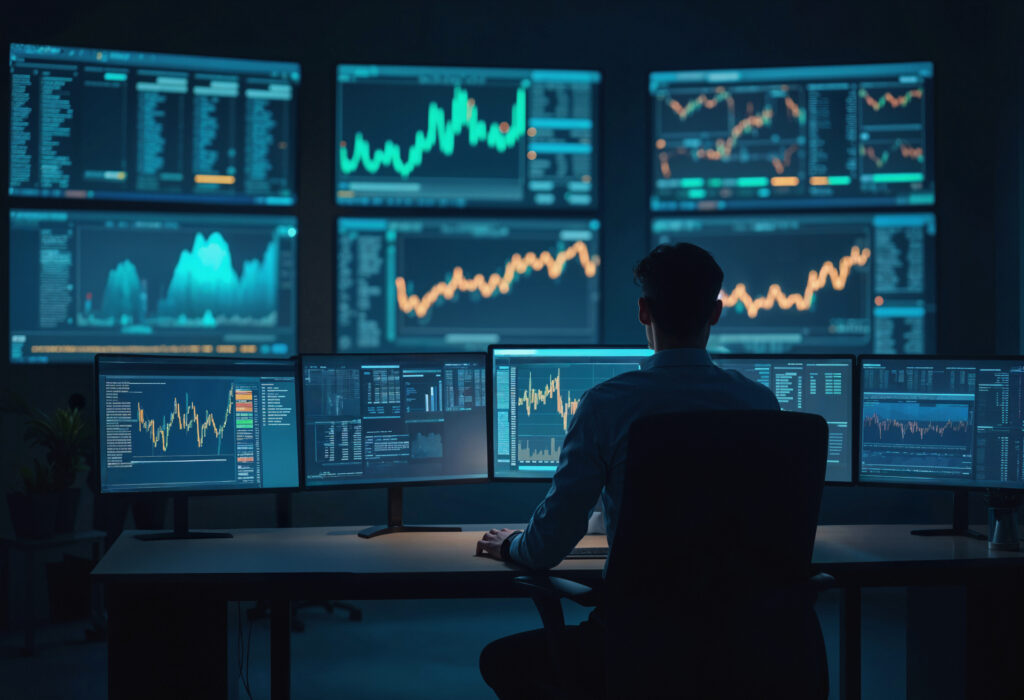
A trader plans to enter a position in a major currency pair shortly before a significant economic release. The AI agent flags that current volatility is elevated, the upcoming release has historically caused sharp price moves in this pair, and the trader’s planned position size represents a higher-than-normal percentage of account capital given current conditions. Consequently, the AI recommends a smaller position size, a wider stop loss to account for the expected volatility, and lower leverage to reduce overall exposure during the high-risk period.
Example 2: High Portfolio Concentration
A trader holds multiple open positions across instruments that the AI identifies as highly correlated all responding similarly to the same fundamental driver. The AI alerts the trader that their effective portfolio exposure is far higher than the individual position sizes suggest, because a single adverse move in the shared driver would affect all positions simultaneously. The AI suggests reducing exposure in some positions and diversifying into less correlated instruments to restore balanced risk.
Example 3: Rapid Volatility Spike
During an active trading session, volatility across a monitored instrument increases sharply and unexpectedly. The AI agent detects this shift within seconds and alerts the trader before the volatility affects their open position significantly. This early warning gives the trader time to assess whether their current stop loss distance remains appropriate for the new volatility environment and to adjust if necessary rather than discovering the problem only after a larger-than-expected move has already occurred.
Benefits of AI Agents for Risk Management
| Traditional Risk Management | AI-Assisted Risk Management |
|---|---|
| Manual monitoring during active sessions only | Continuous monitoring around the clock |
| Fixed rules that do not adapt to conditions | Adaptive analysis based on real-time data |
| Slower reactions to developing market risks | Real-time alerts as conditions change |
| Human emotions can distort risk decisions | Data-driven support removes emotional bias |
| Limited to a handful of instruments | Multiple markets monitored simultaneously |
The practical advantages of AI trading risk management compound over time. Faster analysis means developing risks are identified before they escalate. Reduced emotional bias means risk decisions are grounded in data rather than fear or overconfidence. Continuous monitoring ensures no significant risk development goes unnoticed regardless of market hours. Better consistency means the same risk standards apply to every trade every session without variation.
Limitations of AI Risk Management
Building genuine trust requires an honest assessment of where AI agents for risk management fall short — not just where they excel.
AI is not always correct. Systems generate confident-sounding outputs that can be factually inaccurate, particularly during unusual market conditions that fall outside their historical training data. Every AI recommendation requires human review before it influences a trading decision.
Data quality dependency means that AI risk analysis is only as reliable as the underlying data it processes. Poor, delayed, or incomplete data feeds produce unreliable risk assessments regardless of how sophisticated the underlying system is. Black swan events — rare, extreme market developments with no historical precedent remain largely unpredictable for AI systems as they are for human traders.
Technology failures, including connectivity issues, server outages, and software errors, can interrupt AI monitoring precisely when continuous coverage matters most. False alerts occur regularly, and traders who act on every AI-generated warning without independent verification will make unnecessary adjustments that disrupt otherwise sound positions.
Human oversight, therefore, is not optional it is a structural requirement for responsible use of AI risk monitoring tools.
Best Practices for Using AI Agents Responsibly
Using AI agents for risk management effectively requires a disciplined approach that keeps human judgment at the center of every final decision.
Define your maximum risk parameters before relying on any AI monitoring including maximum loss per trade, maximum daily drawdown, and overall portfolio exposure limits. Never rely only on automation always apply your own analysis to verify AI recommendations before acting on them. Review AI recommendations regularly rather than accepting them automatically, checking whether suggested adjustments align with your own reading of current market conditions.
Keep emotions under control by using AI alerts as a pause mechanism when an alert fires, stop and assess rather than reacting immediately. Test strategies before live trading by reviewing how AI risk recommendations would have affected recent trades. Diversify risk across uncorrelated instruments and monitor performance regularly by tracking how AI risk recommendations have affected your trading outcomes
Can AI Replace Human Risk Management?
The direct answer is no and it is worth being clear about why.
AI agents for risk management work best as assistants that enhance human capabilities rather than systems that operate independently of human oversight. The experience a trader develops over years of live market observation provides contextual awareness, strategic judgment, and adaptive thinking that no AI system currently replicates reliably.
Human traders provide the experience to recognize when current conditions are genuinely unprecedented rather than simply unusual. They provide the judgment to assess whether an AI alert reflects a genuine risk or a data anomaly. They handle strategic planning deciding not just how to manage current risk but how to adjust the overall trading approach in response to changing market environments. They also supply broader market context. This allows risk decisions to be made with genuine insight rather than statistical pattern-matching alone.
AI agents improve the speed, consistency, and breadth of risk monitoring but the decisions that matter most in trading will always require human judgment, experience, and accountability.
FAQ
Can AI prevent trading losses?
No. AI agents for risk management help traders identify and respond to developing risks more quickly and consistently. However, they cannot eliminate losses — every trading strategy involves losing trades, and markets remain inherently unpredictable regardless of the tools used.
How does AI monitor trading risk?
AI agents monitor trading risk by continuously collecting market data, measuring volatility, evaluating portfolio exposure, and comparing current conditions against historical patterns and predefined risk parameters — delivering real-time alerts when risk levels change significantly.
Can AI help with portfolio protection?
Yes. AI portfolio protection monitors asset concentration, correlation between positions, and overall exposure levels simultaneously, alerting traders when portfolio-level risk exceeds safe thresholds in ways that individual position monitoring might miss.
Is AI better than manual risk management?
AI and manual risk management serve different functions. AI excels at continuous, multi-market monitoring and rapid data processing. Human judgment excels at contextual interpretation, strategic adaptation, and final decision-making. The most effective approach combines both.
Can AI reduce emotional trading?
AI agents can help reduce the impact of emotional trading by providing objective, data-driven risk assessments and by flagging behavioral patterns that suggest emotional decision-making. However, managing trading psychology ultimately requires self-awareness and discipline that technology cannot provide on its own.
Do AI agents work across different financial markets?
Yes. AI agents for risk management can monitor risk across forex, indices, stocks, commodities, and other asset classes simultaneously making them particularly valuable for multi-asset traders who need consolidated portfolio-level risk coverage.
Conclusion
AI agents for risk management offer genuine, practical value for traders who want to monitor and protect their positions more effectively than manual methods alone allow. They deliver continuous coverage, faster risk identification, reduced emotional bias, and portfolio-level protection that individual position monitoring cannot match.
However, they are not a replacement for disciplined human risk management. The most effective approach combines AI-powered monitoring with clearly defined risk rules, regular human review of AI recommendations, and a long-term commitment to capital preservation as the primary trading goal.
Use AI agents to support your risk management process not to replace it. Define your rules, let the AI monitor them continuously, review every alert with your own judgment, and maintain the discipline that consistent trading ultimately demands.
For traders ready to explore the full range of AI tools available, our AI Trading Assistants guide covers how these systems support the complete trading workflow. Additionally, our AI Agents for Market Analysis guide shows how AI-powered research and risk management work together as part of a comprehensive, disciplined trading approach. Explore more resources on our Trading Education Blog to continue building the knowledge that makes AI tools most effective.