Introduction
Artificial intelligence is changing the way traders approach the forex market — and the shift is happening faster than most people expected. From automating time-consuming research to monitoring currency pairs around the clock, AI agents for forex trading are quickly moving from an advanced concept to a practical tool used by traders at every level.
However, as interest in AI grows, so does the confusion around what these tools actually do. Many beginners assume that AI agents will trade for them automatically, generate consistent profits, or remove the need for learning altogether. None of these assumptions are accurate. AI agents for forex trading are designed to assist decision-making — not replace it.
In this guide, you will learn what AI agents are, how they work specifically in the forex market, the practical ways beginners can start using them, their genuine benefits and real limitations, and the best practices that keep AI use responsible and effective. For broader context on how AI is reshaping trading technology overall, our AI Agents in Trading pillar guide is an excellent starting point. Additionally, if you are new to the forex market itself, our Forex Trading guide covers the foundational knowledge every trader needs before using any advanced tool.
What Are AI Agents for Forex Trading?
Understanding AI Agents
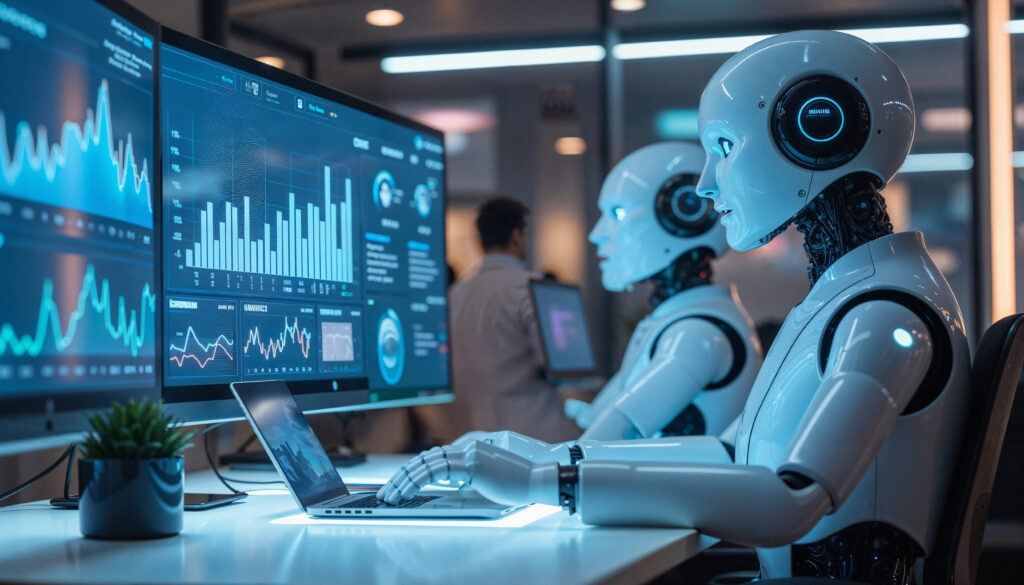
An AI agent for forex trading is a software system that can perceive market information, reason about it, and provide support for trading decisions — all without requiring manual input for every task. Unlike traditional trading software that follows fixed, predefined rules, an AI agent is designed to process information dynamically, adapt to changing conditions, and interact with traders in a conversational, context-aware way.
In the forex market specifically, AI agents can monitor live price feeds, analyze economic data, summarize central bank communications, and deliver relevant insights at any hour of the day. Consequently, traders who previously spent hours gathering information before each session can now access comprehensive market overviews in a fraction of the time.
Why Forex Traders Are Adopting AI Agents
The adoption of AI agents for forex trading is growing for several practical reasons. First, faster research allows traders to stay informed without being overwhelmed. Second, continuous market monitoring ensures that important developments are never missed, even outside normal trading hours. Third, workflow automation handles repetitive tasks such as compiling economic calendars or preparing session briefings so traders can focus on analysis and execution. Finally, smarter decision support gives traders access to scenario analysis, risk alerts, and market summaries that genuinely improve the quality of their preparation.
How AI Agents Work in the Forex Market

Collecting Market Data
AI agents for forex trading begin by gathering data from multiple sources simultaneously. Live currency prices provide real-time price action across major, minor, and exotic pairs. Economic calendars feed the agent with upcoming high-impact events. Central bank announcements and policy statements are processed and summarized. News events from geopolitical developments to inflation releases are monitored continuously so traders never enter a session without critical context.
Analyzing Forex Market Trends
Once data is collected, AI agents apply analytical processes to extract meaningful insights. Trend identification helps traders understand the dominant directional bias across timeframes. Volatility monitoring tracks how market conditions are shifting, which is particularly important when sizing positions or setting stop losses. Currency strength analysis compares the relative performance of individual currencies, helping traders identify the strongest and weakest pairings at any given time.
Delivering Trading Insights
After analysis, AI forex agents deliver insights in formats that are immediately useful to traders. Trade ideas summarize potential setups based on current market conditions. Risk alerts notify traders when exposure levels, volatility spikes, or correlated position risks exceed safe thresholds. Market summaries condense the most important developments of the session into clear, concise overviews. Scenario analysis helps traders think through how different economic outcomes might affect their open or planned positions.
Practical Ways Beginners Can Use AI Agents
Learning Forex Concepts Faster
One of the most underappreciated applications of AI agents for forex trading is education. Beginners can ask AI agents to explain concepts such as how interest rate differentials affect currency values, or what a specific candlestick pattern signals in plain language. This interactive, on-demand learning significantly accelerates the early stages of trading education.
Monitoring Multiple Currency Pairs
Manually monitoring more than two or three currency pairs simultaneously is challenging for any trader. As explored in our detailed guide on monitoring multiple currency pairs, the cognitive load of watching several charts at once during a live session increases the risk of slow, reactive decisions. AI agents, however, can track dozens of pairs at once, alerting traders when specific conditions are met such as a breakout from a key level or a significant volatility spike without requiring constant screen time.
Creating Daily Market Summaries
Before each trading session, an AI forex assistant can compile a comprehensive market summary covering overnight developments, upcoming economic events, key support and resistance levels, and prevailing sentiment across major currency pairs. This preparation replaces what would otherwise take an hour or more of manual research.
Building a Trading Plan
AI agents can help beginners structure their trading plans by walking them through the key components — entry rules, exit criteria, risk limits, and session goals. While the final decisions always rest with the trader, having an AI assistant guide the planning process helps beginners develop the structured thinking that consistent trading demands.
Improving Trade Journaling
Maintaining a thorough trading journal is one of the most valuable habits a forex trader can develop. AI agents can help by structuring journal entries, prompting traders to record the reasoning behind each decision, and analyzing patterns in past entries to identify recurring strengths and weaknesses.
Identifying High-Impact Economic Events
Rather than manually checking economic calendars each morning, traders can rely on AI in forex trading to flag upcoming high-impact events such as central bank rate decisions, non-farm payrolls, or inflation data releases along with a summary of what traders are expecting and how similar events have historically affected relevant currency pairs.
Key Benefits of AI Agents for Forex Trading Beginners Should Know
AI agents offer a range of practical advantages that compound over time as traders integrate them more deeply into their workflow.
Saving research time is the most immediate benefit comprehensive market research that previously took hours can now be completed in minutes. Analyzing more data efficiently means traders gain insights from a broader set of sources than any individual could process manually. Improved trading discipline follows naturally when preparation is structured and thorough, because well-prepared traders make fewer impulsive decisions. Better organization of market information keeps trading plans, journal entries, and research notes structured and accessible. Supporting informed decisions ensures that every trade is backed by clear reasoning rather than guesswork. Continuous market monitoring means that currency pair movements and economic developments are tracked around the clock, even during hours when the trader is away from the screen.
Limitations and Risks of AI Agents
Understanding the limitations of AI agents for forex trading is just as important as appreciating their benefits. Overlooking these risks is one of the most common mistakes beginners make.
AI-generated errors are a real concern. AI systems can produce confident-sounding but factually incorrect outputs a phenomenon known as hallucination. In a trading context, acting on incorrect information has direct financial consequences. Therefore, every AI-generated insight must be verified against primary sources before influencing a trading decision.
Outdated or incomplete data can affect the accuracy of AI analysis, particularly during fast-moving news events where conditions change by the second. Lack of human judgment means AI agents cannot fully account for nuance, context, or experience in the way an skilled trader can. Overdependence on automation is perhaps the most dangerous risk for beginners relying entirely on AI removes the critical thinking and market understanding that long-term trading success requires. Finally, market unpredictability means that no AI system can reliably forecast market movements, and traders who expect otherwise will consistently be disappointed.
The key message is simple: AI agents should support traders, not replace critical thinking.
Best Practices for Beginners
Verify AI Insights Before Trading
Always cross-check AI-generated analysis against your own research and primary market sources before making any trading decision. Treat AI outputs as a starting point for your thinking, not a final answer.
Combine AI with Technical Analysis
AI agents work best when their insights are combined with your own technical analysis. Use AI to gather context and summarize market conditions, then apply your own chart analysis to identify precise entry and exit points. A reliable MT5 Trading Platform gives you the advanced charting tools needed to combine AI insights with professional technical analysis effectively.
Use Proper Risk Management
Risk management is always the trader’s responsibility not the AI’s. Regardless of what an AI agent suggests, always define your stop loss, calculate your position size, and respect your daily loss limits before entering any trade. Our AI Agents for Risk Management guide explores how AI can support this process without replacing it.
Keep Learning About the Forex Market
AI agents are most valuable to traders who already understand what they are looking at. Therefore, invest time in learning forex fundamentals how currency pairs work, what drives price movements, and how to read charts before relying on AI assistance.
Start with Small Position Sizes
While learning to incorporate AI agents into your trading workflow, start with small position sizes. This reduces the financial impact of any mistakes made during the learning period and allows you to build confidence gradually.
AI Agents vs Traditional Forex Trading Automation
Understanding how AI agents compare to traditional automation helps traders choose the right tools for their needs.
| Feature | AI Agents | Traditional Automation |
|---|---|---|
| Market Analysis | Comprehensive | Limited |
| Learns from Context | Yes | No |
| Decision Support | Full | Rule-Based Only |
| Human Interaction | High | Low |
| Adaptability | High | Low |
Traditional automation executes predefined rules without interpretation or flexibility. AI agents, by contrast, process context, adapt to changing conditions, and interact with traders in meaningful ways. Consequently, the two tools serve fundamentally different purposes rather than being direct substitutes for each other.
Common Mistakes Beginners Make When Using AI Agents
Several avoidable mistakes consistently undermine beginners’ experience with AI agents for forex trading.
Blindly following AI recommendations without verification is the most dangerous mistake, as it removes human judgment from a process that requires it. Ignoring economic news and relying solely on AI-generated summaries without understanding the underlying events leads to superficial market awareness. Using AI without a trading plan means AI insights have no structured framework to fit into, making them difficult to act on consistently. Skipping risk management in favor of AI-generated trade ideas removes the most important protection a trader has. Expecting guaranteed profits from AI tools reflects a fundamental misunderstanding of what these systems can and cannot do no tool eliminates the inherent uncertainty of financial markets.
Real-World Use Cases
Daily Forex Market Research
Each morning, traders can use AI agents to compile overnight market developments, summarize major currency moves, and highlight the key themes driving price action across session. This replaces hours of manual reading with a structured, actionable briefing.
Currency Pair Monitoring
AI agents can monitor watchlists of currency pairs continuously, alerting traders when price approaches key levels, volatility increases significantly, or technical conditions align with predefined criteria.
Trading Session Preparation
Before each session, AI forex assistants can generate a structured preparation checklist covering upcoming economic events, key levels on priority pairs, current sentiment conditions, and any overnight developments that could affect open positions.
Economic Calendar Analysis
Rather than manually interpreting economic releases, traders can ask AI agents to explain what a specific data point means, how it compares to expectations, and what its typical impact has been on relevant currency pairs historically.
Market Sentiment Reviews
AI agents can scan news sources, economic commentary, and market reports to provide a consolidated sentiment overview helping traders understand whether the broader market mood is risk-on, risk-off, or mixed before committing to a position.
The Future of AI Agents in Forex Trading

The capabilities of AI agents for forex trading will continue to expand significantly over the coming years, and the traders who understand this technology now will be best positioned to benefit.
Smarter market monitoring will allow AI agents to track increasingly complex sets of variables simultaneously, delivering more nuanced and accurate market assessments. Personalized trading assistants will learn individual traders’ styles, preferences, and risk tolerances over time, making their outputs progressively more relevant and useful. Better workflow automation will integrate AI agents more seamlessly into the full trading routine, from pre-session preparation through live monitoring to post-session review. Enhanced decision support will combine multiple analytical approaches technical, fundamental, and sentiment-based into unified, context-aware insights. Integration with trading platforms will allow AI agents to access real-time position data and deliver context-aware risk alerts directly within the trader’s existing interface.
As these developments unfold, the traders who use AI agents most effectively will be those who maintain their own skills, judgment, and discipline alongside the technology. For ongoing developments in this space, our AI Agents in Trading pillar article and upcoming AI Agents for Market Analysis guide will keep you informed as the landscape evolves.
FAQ
Can beginners use AI agents?
Yes. In fact, beginners can benefit significantly from AI agents as learning and research tools. However, beginners should invest time in understanding forex fundamentals before relying heavily on AI-generated insights.
Do AI agents trade automatically?
Most AI agents for forex trading focus on research, analysis, and decision support rather than automatic trade execution. Human oversight and approval remain central to responsible use.
How do AI agents analyze currency markets?
AI agents analyze currency markets by processing live price data, economic releases, central bank communications, news events, and sentiment indicators simultaneously, then delivering organized summaries and insights to the trader.
Are AI agents better than traditional automation?
They serve different purposes. Traditional automation executes fixed rules reliably and quickly. AI agents provide context-aware analysis, adaptive decision support, and conversational interaction making them more flexible but also requiring more human oversight.
Can AI help improve forex trading decisions?
Yes, when used correctly. AI agents improve the quality and efficiency of pre-trade research, help traders stay organized, and flag risks that might otherwise be missed all of which can support better decision-making over time.
What are the risks of using AI in forex trading?
The primary risks include AI-generated errors, over-reliance on automation, outdated data, and the erosion of critical thinking skills when traders stop applying their own judgment. Proper verification, risk management, and ongoing education mitigate these risks effectively.
Conclusion
AI agents for forex trading represent a meaningful step forward in how traders can research, prepare, and manage their workflow but they are not a shortcut to profitability, and they are not a replacement for knowledge, discipline, or sound risk management.
For beginners, the most valuable use of AI agents is as a research and learning tool helping you understand market conditions faster, stay organized, and build structured trading habits from the start. As your experience grows, AI agents can take on increasingly sophisticated roles in your daily routine without ever replacing the judgment that consistent trading ultimately requires.
The traders who will benefit most from this technology are those who combine AI efficiency with genuine market understanding and disciplined execution. Start by learning the fundamentals, use AI to support your preparation, verify every insight before acting, and always manage your risk regardless of what any tool suggests.
For traders ready to explore this further, our AI Agents in Trading guide provides the complete framework and our Forex Trading resources give you the foundational knowledge to make the most of every tool available to you.